
The short version
Cartagena is hot, flat, coastal and old. Medellín is mild, steep, inland and modern. That single difference decides most trips, and everything else is detail.
We should say plainly where we're standing: we run a small hotel and beach club on Tierra Bomba, an island 25 minutes by boat off Cartagena. We're not neutral, and we're not going to pretend to be Medellín experts. What follows is what we actually tell guests who write to ask, including the cases where we'd send them to the mountains instead.
The weather is the real decision
Cartagena is hot and humid every day of the year. Daily highs sit in the high 80s to low 90s Fahrenheit with overnight lows around 80, so there's no cool part of the day to recover in. That's fine if your plan involves water, which is why most people's plan here involves water. It's punishing if your plan is six hours of walking colonial streets at midday.
Medellín sits at 1,495 metres in the Aburrá Valley, which is why it gets called the city of eternal spring. Mild, springlike, and you'll want a layer in the evening. If heat ruins you, this is not a close call.
Our own seasonal note: September and October are our wettest months, and January is the driest and the busiest. Cartagena in January is a different city from Cartagena in October, and that matters more here than the choice of city does.
The sea, or the absence of it
This is the other half of it. Medellín is inland in a mountain valley. There's no beach, no boat, no swim at the end of the day.
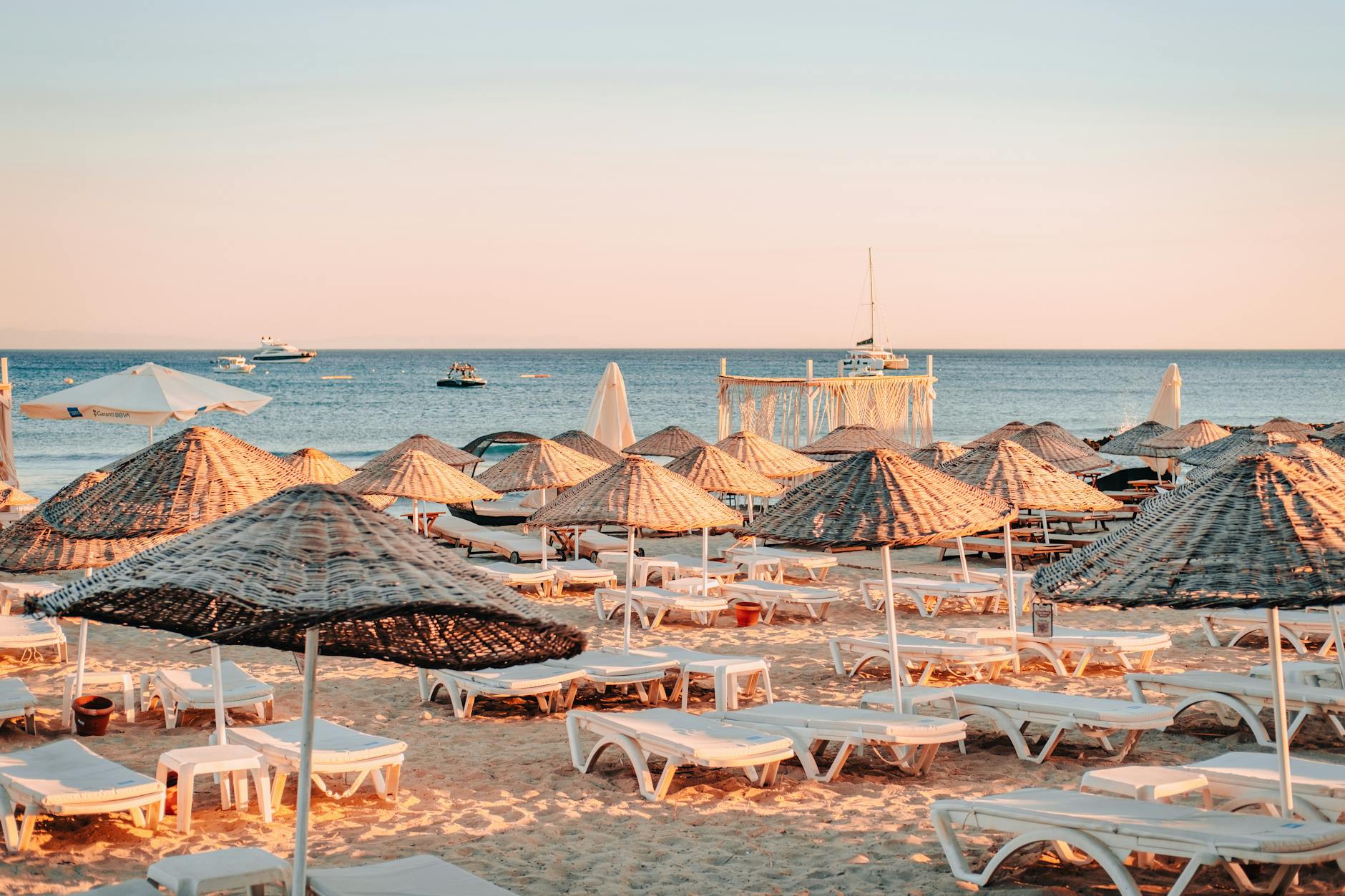
Out here you can be on a boat at 10am and on an island by 10:25. We run three crossings a day from Muelle de la Bodeguita, at 10am, 11:30am and 5pm, back at 4pm and 5:30pm. Our house reef is an eight minute swim off the beach and we're a PADI Dive Resort, so a beginner discovery dive is a realistic thing to do on a Tuesday. Our beach has volcanic sand rather than the white sand of the Rosario Islands. It's natural, it's clean, and it leads out onto open ocean.
If that paragraph sounds like your holiday, you've chosen Cartagena.
What you actually do in each
In Cartagena, the Walled City is the thing: a walkable colonial centre best taken early or late, with the middle of the day spent somewhere with water in it. Then the islands. We'd give one full day to the old city, one to the water, and the rest to whichever of those you liked more.
In Medellín, the set pieces people come back talking about are the Comuna 13 graffiti tour with its cable cars and street food, and the day trip out to Guatapé and the El Peñol rock, which is a long day: organised tours run around ten hours door to door. Nightlife clusters around Parque Lleras.
One honest point in Medellín's favour: it's a city you can walk all day without wilting, and it's cheaper to spend time in than a Caribbean tourist port. We'd be lying if we said otherwise.
You probably don't have to choose
The flight between them is nonstop and short, about an hour and twenty to an hour and twenty-six minutes, covering roughly 295 miles. On a trip of six days or more, do both: three or four days here, three there, one flight in the middle.
Under four days, pick one. Splitting a short trip means two airport mornings and two hotel check-ins, and you'll spend the best part of a day in transit for the privilege.
If you pick us, how we'd split it
Stay in the Walled City for the first nights so you can eat late and walk the walls at dusk. Then come out to the island for the rest. Our sister property, Townhouse, is in the centre of the Historic Walled City, so you can do both halves without a lot of logistics.
On the island side: 11 rooms, several cabañas with their own plunge pool and outdoor shower, the standalone Mamón cabaña set back from everything if you want quiet, and Lulo and Guama, our two biggest rooms, if there are three or four of you. Full board, all food and soft drinks, runs $90 per person per night. There's a $20 per night resort fee, which is what it costs to make water and power on an island with no mains connection. A day pass with boat transfers both ways is $40 if you'd rather just come for the day and sleep in the city.
Kitchen is run by Chef Pedro Mosqueda, who trained at the Gato Dumas Institute in Bogotá and cooked in leading Colombian kitchens before New York. Most of what's on the plate is local.
See you on the boat.