
Start here: the nine things worth ordering
Cartagena food is coastal Caribbean cooking, not the Andean food most people picture when they think of Colombia. Coconut, corn, plantain, cassava and fish do most of the work. Here's the list we give guests before they get on the boat, and what we'd actually order.
Arepa de huevo. A corn arepa fried once, split, filled with a raw egg and sometimes minced beef, then fried again. It's the city's best known street food and it is breakfast, not dinner. Buy it hot from a cart in the morning. A cold one that has been sitting in a tray since six is a different and much sadder food.
Cazuela de mariscos. A thick seafood stew of shrimp, white fish and mussels in coconut milk. This is the big-lunch order, the one that arrives bubbling and ends the afternoon's ambitions. Order it when you have nowhere to be for two hours.
Posta negra cartagenera. Beef slow-cooked until it's almost black, sweet from panela, usually served over coconut rice. If you eat one non-seafood dish on the coast, make it this one.
Arroz con coco. Coconut rice, cooked down until the milk caramelises into dark grains through the white. It comes as a side with nearly everything. The dark bits from the bottom of the pot are the good part, so ask for them.
Ceviche and cóctel de camarones. Two different things that often share a menu. Ceviche is citrus-cured fish or shrimp. The cóctel is shrimp in a cold pink sauce, sweeter, sold everywhere including out of buckets on the beach. We'd take the ceviche sitting down in a restaurant, and be wary of anything that has spent the afternoon in the sun.
Mote de queso. A soup of ñame, a starchy yam, with salty white cheese melting into it. Nobody puts this on a top-ten list and everyone who tries it orders it again.
Sancocho de pescado. Fish soup with plantain and cassava, the coast's Sunday food. Heavy, restorative, best eaten within sight of water.
Patacón con hogao. Smashed and twice-fried green plantain with a tomato and onion sofrito. The chip of the Caribbean coast, and the right thing to order with a beer.
Cocada. A coconut sweet, sold in stacks by the palenqueras and in every corner shop. Buy one. Don't buy six.
How to eat in the city without regretting it
Eat the fried street food early, when the oil is fresh and the queue is locals. Do the seafood as a sit-down lunch rather than a late dinner, because the coast eats big in the middle of the day and that's when the kitchens are at their best. Then read your bill: Colombian restaurants commonly add a voluntary 10% service charge, and you should be asked before it goes on.
On tax we can only speak for ourselves. We apply 8% food tax on all food and drinks, it's non-refundable, and it's already in what you pay us.
What we cook out here, 25 minutes offshore
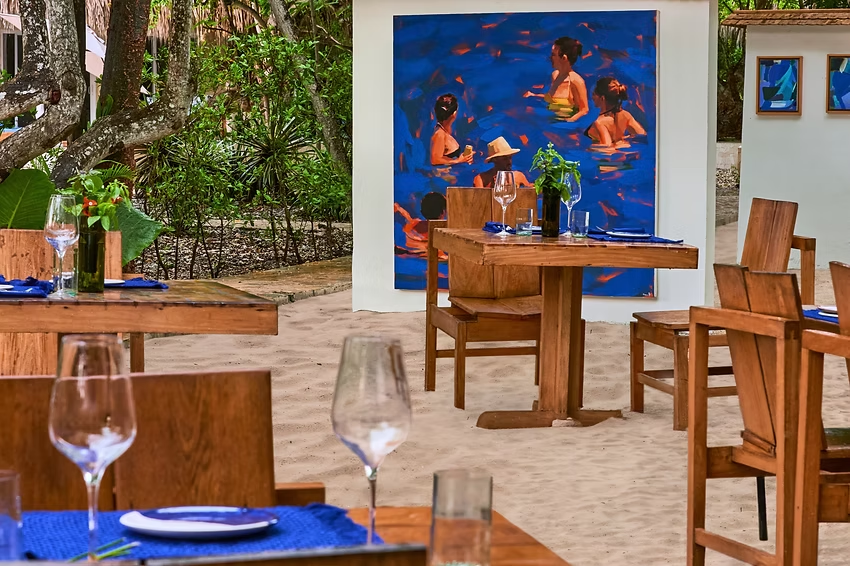
We're on Tierra Bomba, 25 minutes by boat from Cartagena, and our kitchen is run by Executive Chef Pedro Mosqueda, who trained at the Gato Dumas Institute in Bogotá and cooked in leading Colombian kitchens before New York and then the coast. The list above is our starting point rather than our menu. We're conscientious about where things come from: the meat we serve is sustainably raised and ethically treated, including how far the animal travelled.
We were the first beach club in Cartagena to put together a wine list, which tells you what island food used to mean around here, and yes, we sell rosé by the magnum. The cocktails are made with fresh juices. The restaurant runs 10am to 11pm and everyone is welcome, not only people staying the night.
If you'd rather learn one of these than just eat it, our cooking class is ceviche, with a little extra flair, for two, wine included.
One warning that saves an awkward moment at the gate: you can't bring your own food and drink in. We aren't going to lose it over a banana in your bag, but we don't allow guests to bring lunch, and we don't cook food brought in from elsewhere.
If you don't eat meat or fish
You'll eat fine with us, though you should know the classics skew heavily to fish and beef. Plenty of us here have been vegetarian or vegan at some point, so there's a real offering rather than one apologetic pasta, and lactose or gluten intolerance is no drama. Tell us when you book and the kitchen plans for it instead of improvising at the pass.
What we don't do is all-you-can-eat. If you want the food handled for a whole stay, full board with all food and soft drinks is $90 per person per night. That is not an all-inclusive bar, and that's deliberate.
A sensible plan for three days of eating
Day one: arepa de huevo from a cart before the heat, then a long seafood lunch in the city. Day two: come out to us on the 10am or 11:30am boat and eat with your feet in the sand. Day three: posta negra, and a cocada on the walls at sunset.
See you on the boat.