
What November actually feels like
Hot, humid, and a little less wet every week. Average highs sit at 31.4C with nights around 25.4C, and the month averages out at 28.4C, which is within a degree of every other month of the Cartagena year. The difference between months here is never temperature. It's water: how much falls on you, and how the sea behaves.
November is the last month of the rainy season. December through April is the dry run. So you're catching the tail of the wet half, and the tail is much kinder than the head of it.
How much it rains, and when
About 140mm over roughly 11 days of the month. For comparison, October gets 230mm across 16 days and December drops to 35mm across 3. The back end of November is drier than the front.
What the numbers don't tell you is the shape of it. Rain on this coast tends to come in one heavy, warm, theatrical hour, usually in the afternoon, and then stop. You get about six hours of sunshine a day on average in November. A day with 15mm of rain in it is still mostly a day in the sun. If you're picturing a week of drizzle, that isn't this.
The sea in November
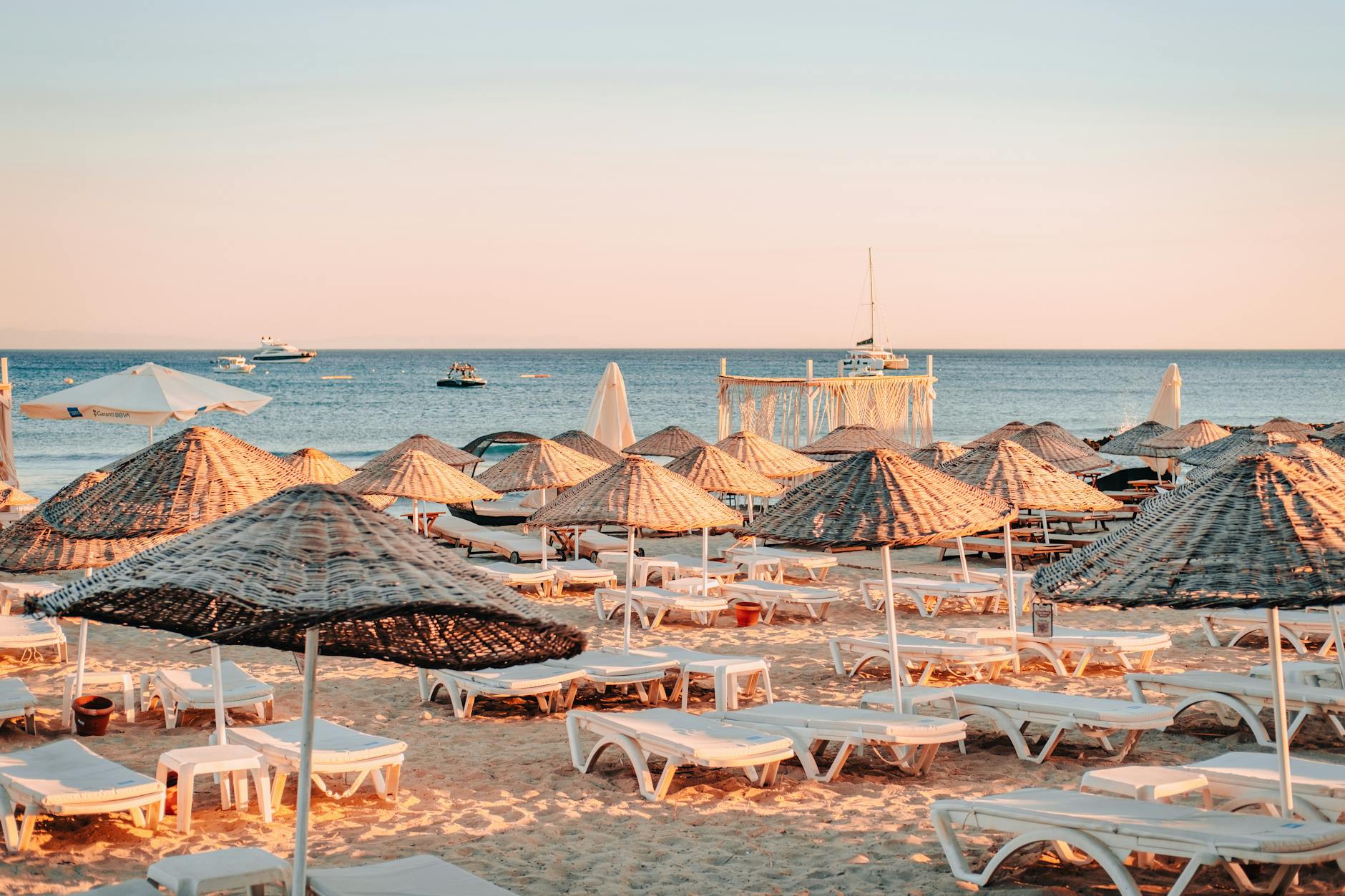
The water is 29C, the warmest it gets all year, and it holds that from June right through November. Our beach is volcanic sand, so it's grey-brown rather than the white you'll see in the Rosario Islands, and it leads straight out to open ocean rather than a sheltered bay. That's the trade. The swimming is real swimming, with swell and a bit of push, and after rain the water can carry sediment for a day.
Our pool is the backup, and in November it's a popular one. Weekdays out here are quiet. Weekends get livelier, and the Saturday pool party runs 1 to 5.
Does the rain stop the boat?
Rarely. Our crossing is 25 minutes from Cartagena, leaving the Muelle de la Bodeguita at 10am, 11:30am and 5pm, with boats back from us at 4pm and 5:30pm. Rain on its own doesn't cancel anything. Wind does, occasionally, and November can bring breezy days. In windy weather the sea gets choppy, but it isn't white-knuckle, and it's calmer than the Rosario Islands run that most day-trippers take.
If the tide is very high or the sea is unusually rough, we land at the dock in Bocachica village instead, around a mile from us, and you ride pillion on a motorbike taxi from there. People who were nervous about it tend to list it as the best part of the day.
The other thing that happens in November
Cartagena throws its Independence fiestas in the first half of the month: parades, brass bands, flour and water in the streets of the old city. It changes the feel of a November trip, and it changes how busy the Walled City is. We wrote up the dates and what to expect separately, and we'd plan around it rather than through it.
November or December?
Come in November if you'd rather have the city to yourself and don't mind an afternoon downpour. Rain is well down from October, the sea is at its warmest, and the dry-season crowd hasn't arrived.
Wait for December if your trip hinges on cloudless days. December gets 35mm of rain all month and eight hours of sun a day. It also gets the Christmas and New Year rush, which books up months ahead.
One honest note on hurricanes, since people ask: Cartagena sits at the edge of the Atlantic hurricane belt and is only ever brushed by them. The season runs June to November and storms are most likely August to October. Iota passed in mid-November 2020. It's a real thing that happens rarely, not a thing to plan a November trip around.
What we'd pack for a November stay
A light rain layer you don't mind getting wet, because you will, and sunscreen, because the sun is at full strength between the showers. Linen over anything heavy. We have no phone signal on the island, so if you want to be reachable, download what you need before you get on the boat. Wi-Fi at the beach club and hotel is high-speed and holds up to video calls, and there's a shaded table near power sockets if you have to work.
See you on the boat.